The Complete Guide to Professional Car Radiator Replace Service:
Hi, fellow driver. Is your car feeling a bit… hot under the hood lately? Maybe you have noticed the temperature gauge inching a little higher than usual on your daily commute, or perhaps you have spotted a colorful, suspicious puddle under your parked car. These are not just minor annoyances; they are your vehicle’s clear distress signals, telling you something is wrong with its cooling system. More specifically, these signs often point right to a failing radiator. Knowing when it is time for a professional Car Radiator Replace service isn’t just about car maintenance; it’s about protecting one major investment and avoiding being left stranded roadside.
At Car Medic, we understand how important it is for a car to have a cooling system that actually works. Our expertise is in providing reliable, thorough, and hassle-free radiator replacement services that give renewed health to your vehicle and driving confidence to you. We cut through the confusion and get straight to a solution that works. Ready to give your car the care it needs? Call us on 0561145797 anytime for a friendly chat or to schedule a diagnostic check.
Understanding Your Car’s Cooling System: It’s More Than Just the Radiator
Let’s start with making a mystery of what we’re referring to. Think of the engine in your car as a very diligent strongman. It’s producing several thousands of small, highly regulated explosions every minute to move you along, and it, therefore, produces a tremendous amount of heat. This would literally melt the internal components of the engine in a matter of moments if left unmanaged. Enter the unsung hero: the cooling system.
This system is a brilliantly engineered network for one critical job: to manage and dissipate that engine heat, maintaining a perfect, stable operating temperature—usually somewhere between 195°F and 220°F (90°C to 105°C). It’s all a delicate balance. Too cold, and the engine runs inefficiently; too hot, and you face catastrophic damage.
The Radiator: The Heart of the Cooling Loop
The radiator is the centerpiece, the very core heat exchanger of this whole system. Think of it as an air conditioner for your car’s engine. Here’s how cooling works in a simplified step-by-step way:
- Heat Absorption: The coolant, a special liquid mixture of water and antifreeze, circulates through passages in the engine block and cylinder head, where it absorbs the intense heat.
- Trip to the Radiator: This by now extremely hot coolant is pumped via the water pump through a hose into the top or side tank of the radiator.
- The Cooling Process: A radiator is essentially a network of many thin tubes and delicate aluminum fins. As the hot coolant makes its way down these tubes, air flowing through the front grille pulls—and when the car is stationary, is assisted by a cooling fan—passes over the fins. This airflow pulls the heat out of the coolant.
- Back to the Engine: Collected coolant at the bottom of the radiator is circulated via another hose to get back into the engine, repeating the cycle anew.
This is a thermodynamic work of genius, a continuous loop that depends on every part of the system playing its role in perfect harmony.
Key Components Working with Your Radiator
To fully understand radiator replacement, it helps to know its teammates:
- Water Pump: The heart that keeps the coolant moving, usually driven by a belt from the engine.
- Thermostat: The smart gatekeeper. It remains shut until the engine warms up, letting the engine reach its operating temperature as soon as possible. It opens to allow coolant to flow into the radiator.
- Cooling Fans: These electric fans mount behind or in front of the radiator. They kick on when you’re idling or driving slowly, ensuring there’s enough airflow even when you’re not moving fast enough to create a natural breeze.
- Hoses: These are the flexible highways, both upper and lower, along which coolant is carried to and from the radiator. They resist extremely high heat and pressure, yet tend to deteriorate with time.
- Coolant/Antifreeze: This is not water. It is a special fluid that increases the boiling point and lowers the freezing point, with additives to prevent corrosion in the entire system.
- Radiator Cap: Although a small component, it is highly important. It is a pressure cap, sealing the system, raising the boiling point of coolant further, and allowing the operating system to become much more effective.
If this integrated system breaks down, the inevitable outcome is overheating of the engine. The radiator, exposed to the elements and heat pressures constantly, is one of the first major components to fail.
Obvious Signs That You Must Change Your Car’s Radiator
Your car is quite communicative if you know what to look for. Radiators rarely fail without warning; they just give you signs—sometimes subtle, sometimes glaring. Recognizing the symptoms of a bad radiator early can be the difference between a straightforward repair and an engine rebuild.
The Top Visual and Performance Red Flags:
The Temperature Gauge Climbs:
This is your most direct dashboard warning. If the needle constantly rises past the middle and into the “H” or red zone, or if a high-temperature warning light comes on, pull over safely as soon as possible.
Colorful Coolant Leaks Under the Car:
This is a classic sign. In most cases, coolant is green, orange, pink, or yellow. If your car is parked and there is a puddle at either the front center or one of the front corners, it very well could indicate a leak from the radiator, a hose, or a connection point. Coolant usually has a sweet, characteristic smell.
Constant Low Coolant Levels:
If you find yourself consistently topping off the coolant in the translucent overflow reservoir, then it is escaping somewhere. A small leak might not leave a visible puddle if it burns off on hot engine parts.
Discolored or Contaminated Coolant:
When you check the coolant in the reservoir, it should look bright and clear. When it assumes a rusty, oily, milky, or murky sludge-like appearance, this means there could be serious internal corrosion, oil is leaking into the cooling system, or the coolant has degraded and could block your radiator.
Steam or Sweet Odor Coming from the Hood:
If steam flows from beneath the hood, this is a serious sign that the car is overheating, which usually denotes leakage of coolant onto hot parts of the engine. That sweet, syrupy smell is vaporized coolant.
Passenger Heater Stops Working:
The cabin heater in your car utilizes hot coolant from the engine. If the setting is put to ‘hot’ and cold air is coming through from the heater, this could mean insufficient coolant inside or some kind of blockage that prevents the flow of the liquid.
The Common Culprits: What Actually Goes Wrong with a Radiator?
Understanding why radiators fail helps you appreciate the need for a proper Car Radiator Replace.
- Physical Damage and Corrosion: This is a leading cause. Road debris, like stones, can puncture the thin fins. Minor front-end bumps can crack the plastic side tanks or bend the core. Internally, years of exposure to different water minerals and electrochemical reactions can corrode the metal tubes from the inside out, leading to pinhole leaks.
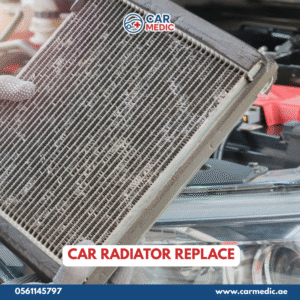
- Internal Clogging and Blockage: Rust, scale, and stop-leak products of previous repairs accumulate inside the radiator tubes after many miles of service without proper maintenance of the cooling system. It acts almost like plaque in an artery, severely limiting coolant flow and killing cooling efficiency. The engine overheats even when coolant levels are full.
- Damaged or Blocked Cooling Fins: The fins are made of thin aluminum. In case they get crumpled by a pressure washer, clogged with bugs and leaves and dirt, or covered in road grime, they cannot transfer heat to the passing air. Imagine this as putting a blanket over your radiator.
- Seals that Fail and a Defective Pressure Cap: The side tank rubber seals dry out and crack. More importantly, a failure of the radiator cap to hold the correct pressure—typically between 13 and 18 PSI—will lead to a boiling of the coolant at lower temperatures, causing overflow and a loss of coolant.
- The Domino Effect of Delay: Ignoring these problems doesn’t just risk a tow truck. Letting your engine overheat can trigger a cascade of failures: a blown head gasket, where coolant and oil mix; a warped cylinder head; or even a cracked engine block. These are engine overheating repair jobs that can easily cost five to ten times more than a timely radiator replacement.
The Car Medic Professional Radiator Replacement Process: Precision and Care
By choosing Car Medic for your radiator installation, you are choosing a service characterized by thoroughness, skill, and a commitment to getting it right. We don’t just swap parts; we perform a comprehensive cooling system restoration. Here is our detailed step-by-step protocol:
Step 1: Comprehensive diagnostic assessment.
We never begin with an assumption. We initiate our process with a cooling system pressure test. It is such an important tool. We hook up a special pump onto the radiator or the reservoir to pressurize the entire system. This allows us to:
- Pinpoint the exact location of even the smallest leak.
- Check to see that the radiator itself is leaking and not a nearby hose or the water pump.
- Check for pressure holding in the system, which would rule out cap issues.
We also visually inspect all hoses and belts, along with the radiator fins and water pump, for any sign of wear or seepage.
Step 2: Safe Drainage and Careful Removal
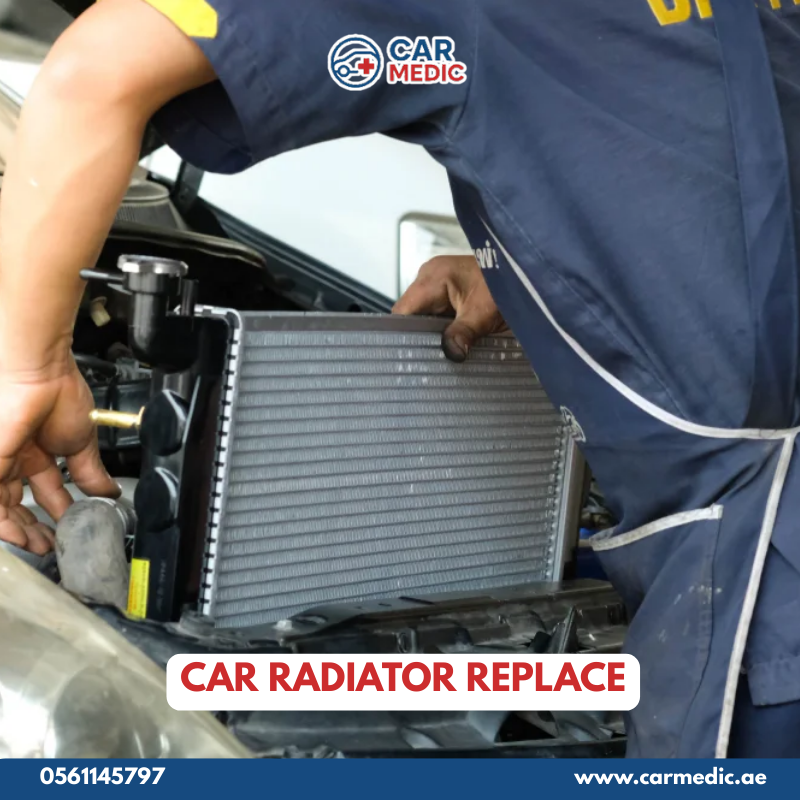
Once we confirm that there is a faulty radiator, we proceed with the Car Radiator Replace service. We first safely drain all the old coolant into approved containers for environmentally correct disposal. Next, we methodically:
- Disconnect the upper and lower radiator hoses.
- Disconnect the electrical connectors for the cooling fan and any temperature sensors.
- If your automobile has an automatic transmission, we disconnect the transmission fluid cooler lines that run through the radiator using special tools to prevent spills.
- Unbolt and remove any mounting brackets.
Carefully lift the old radiator out of the engine bay, while being careful not to damage the surrounding components.
Step 3: Precision Installation and System Renewal
We install a premium quality, direct-fit replacement radiator. This is a perfect time for preventive maintenance. We always recommend and usually include:
- New Upper & Lower Radiator Hoses: Old hoses can bulge or crack from the inside.
- New Thermostat: This will ensure proper temperature regulation right from day one.
- New Radiator Pressure Cap: Ensures a perfect seal and the right system pressure.
- Fresh Coolant: We refill the system with the correct type and 50/50 mix of premium antifreeze/coolant recommended by the manufacturer.
Step 4: The Critical Bleeding Process
This step delineates professional work from amateur attempts. Following any Car Radiator Replace, air gets trapped in the high points of the cooling system—often in the heater core or engine block. These air pockets create insulating voids where coolant can’t flow, leading to immediate overheating.
The technicians at our service center are well-versed in bleeding the cooling system. Using specialized procedures that may include the use of spill-free funnels, opening bleeder valves, or raising the front of the car, we methodically purge every single air bubble to ensure a solid, uninterrupted flow of coolant.
Step 5: Vigorous Testing & Final Verification
When the car starts, our job is not yet complete. We do a multi-point check:
- Idle Test: We run the engine with the heater on full blast until the thermostat opens and the cooling fan cycles on and off at least twice.
- Leak Re-check: We re-pressurize the system to confirm no leaks at any new connection.
- Road Test: Finally, we take your car on a test drive under various conditions—stop-and-go, highway speeds—to monitor the temperature gauge and to make sure everything works flawlessly in real-world driving.
Why Choosing Professional Service Beats DIY or Cheap Alternatives
Faced with the daunting cost of replacing a radiator, it is tempting to find the cheapest option or even to consider a do-it-yourself project. However, the risks and hidden costs from an improper replacement are substantial. Here’s the value proposition by Car Medic:
- Accurate Diagnosis Prevents Misrepair: We make sure we fix the right problem. Is it the radiator, or is it overheating due to a failing water pump or a stuck-closed thermostat? Our diagnostic step answers this definitively.
- Quality Parts with Warranty Protection: We source reliable parts and back our entire radiator repair and replacement service with a clear, written warranty covering both parts and labor. This peace of mind is invaluable.
- Preventing Costly Secondary Damage: Proper bleeding and installation prevent immediate re-overheating. Most of the catastrophic engine repairs we see are the direct result of improper cooling system work done elsewhere.
- Time and Frustration Saved: What can be a complex, full-day struggle for the DIYer—involving specialized tools, coolant disposal, and the tricky bleeding process—is a smooth, efficient service in our expert hands.
- Holistic System Health Check: Our service is more than a swap; it’s a full cooling system assessment. We will advise you on the status of your water pump, serpentine belt, and all other components to give you a full view of the health status of your vehicle. This is what true cooling system maintenance is.
FAQs Regarding Car Radiator Replace
1. How long does a professional Car Radiator Replace service usually take?
For most standard passenger vehicles, you can estimate 3 to 5 hours for the entire process, from diagnosis to completion and testing. This can be more or less, depending on the circumstances. Modern cars often have tightly packed engine bays and/or complex front-end assemblies that may take more time for safe access. We always give a realistic time estimate after our initial inspection.
2. What determines the final cost of radiator replacement?
Its cost is driven mainly by two factors: the part cost and the labor time. The radiator cost itself differs a lot depending on the make, model, and whether it has special features, like the integration with transmission coolers. Labor depends on the accessibility of the vehicle. Although it is an important service, it saves you from possible engine repairs, which generally cost AED 3,000 to AED 5,000 or even more. For an accurate, no-obligation quote specific to your vehicle, call Car Medic at 0561145797.
3. Can a radiator be repaired rather than replaced?
Sometimes, but it’s often not the best long-term solution. Small leaks in the plastic end tanks can sometimes be sealed, and external fin damage can be combed out. However, with leaks in the metal core, major internal corrosion, or clogging, a complete Car Radiator Replace is the only dependable fix. A repair on a weakened radiator is usually a temporary patch. We will always explain your options and recommend what we think is the most effective and economical choice for your situation.
4. What’s the difference between a coolant flush and needing a new radiator?
This is a very important distinction. A coolant flush is considered routine maintenance. In other words, the old fluid is drained, the system is cleaned with a chemical flush to remove debris, and new coolant is added inside. It preserves a healthy system. A radiator replacement falls under mechanical repair. It is performed when the physical radiator unit is damaged, leaking, or clogged and can no longer perform its function. It fixes a broken system.
5. If my car starts overheating, is it safe to drive a short distance?
We can’t say it strongly enough: No. Driving an overheating vehicle, even for “just another mile,” is one of the most destructive things you can do to your engine. The excessive heat can warp metal components in minutes. If your temperature warning light comes on or the gauge spikes, turn off your AC and turn on your heater to the hottest setting and fan speed. This pulls heat from the engine into the cabin. If possible, pull over safely and turn off the engine. Call for help. Now is the time to call Car Medic at 0561145797 for advice and roadside assistance.
Protect Your Engine’s Future with a Timely Radiator Replacement.
The cooling system in your vehicle is its first line of defense against one of the most common and destructive forms of engine failure. A failing radiator isn’t a suggestion; it’s an urgent warning. Investing in a professional Car Radiator Replace service from Car Medic is ultimately an investment in your vehicle’s longevity, your safety, and your financial well-being. From the initial pressure test diagnosis, through our painstaking bleeding procedure to our final verification drive, your car receives all the precision and care it deserves. We believe in transparent service, clear communication, and work that stands the test of time and temperature.
Don’t ignore the warning signs. If any of the above symptoms sound a little too familiar, then let Car Medic’s professionals provide the solution. Call us today at 0561145797 for honest advice and a clear estimate, and let’s book you in for a professional radiator replacement that will keep your engine running cool, smooth, and reliably for miles to come.