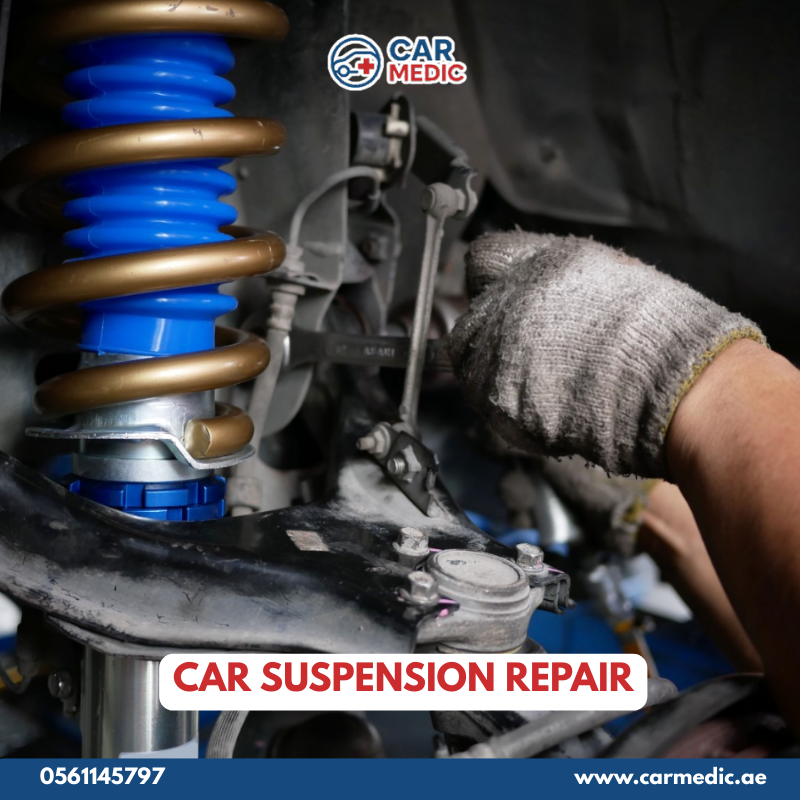
Car Suspension Repair: Restoring Your Smooth Ride, Safety, and Vehicle Longevity
When you drive, you expect a comfortable, controlled experience. That smooth feeling, the stability around corners, and the way your car absorbs bumps—it all comes down to one crucial system: your car suspension repair. If your daily commute has started to get bumpy, your steering seems sloppy, or your vehicle dips too much when braking, you need professional help. At Car Medic, we specialize in high-quality car suspension repair, ensuring your vehicle is safe, comfortable, and performing exactly as it should. You won’t have to wait for a minor issue to develop into a major, expensive one. Call us now on 0561145797 to book your diagnostic appointment. We ensure every suspension repair service we perform meets the highest standards of safety and performance.
Why Your Car’s Suspension System Matters: And Why We’re the Experts
Your car’s suspension does much more than just make your ride comfortable; it forms a critical bridge between the road and the car’s chassis. It directly affects your vehicle’s safety, handling, and tire wear. Understanding these functions underlines why timely car suspension repair is an investment, not just an expense.
The Core Functions of Your Suspension System:
- Safety: The system keeps all four tires in constant contact with the road surface at all times, regardless of road imperfections. This constant contact is crucial for good steering, maximum traction, and for the correct working of the anti-lock braking system (ABS). A defective suspension dramatically lengthens your stopping distance and makes evasive maneuvers hazardous and unpredictable. When control is lost, safety is compromised.
- Control and Handling: Components such as shock absorbers and struts control the motion of your car’s springs. They dampen the energy stored in the springs after you drive over a bump. Without the damper control, your car would keep on bouncing, causing a loss of steady, sure steering and excessive body roll when cornering. Good suspension delivers predictable, responsive handling.
- Comfort: The coil or leaf springs and dampers absorb the energy from potholes and road imperfections, preventing that jarring force from reaching the cabin. A well-maintained suspension offers a premium, comfortable ride quality, reducing driver fatigue on long journeys.
- Support and Alignment: The various bushings, control arms, and ball joints serve to keep the proper alignment of the wheel to the body of the vehicle. When these wear out, the alignment of the wheels is lost, resulting in poor handling, along with severe uneven wear of the tires.
We understand these intricacies at Car Medic. Our seasoned technicians approach every car suspension repair job with an expert blend of technical knowledge and practical experience. We don’t just replace parts; we diagnose the root cause of the failure, ensuring a comprehensive fix that addresses the entire system.
Recognizing the Signs: Do You Need Car Suspension Repair?
Your car usually gives several warning signs before a component completely fails. Ignoring these subtle cues often leads to accelerated wear on other related parts, turning what would have been a simple fix into an expensive system overhaul. Paying close attention to these common indicators ensures you schedule your suspension repair service in a timely manner.
1. Excessive Bouncing, Oscillating, or “Floating”
The easiest way to check your damping components is the “bounce test.” If you push down sharply on a corner of the car, it should compress and then return immediately to its resting height with minimal rebound (one full oscillation, then settling). If your car continues to oscillate (bounce up and down) for several seconds, your shock absorbers or struts have likely failed or lost their hydraulic fluid. This condition, often described as a “floating” or “mushy” sensation, severely compromises vehicle control because the tires lose their consistent grip on the road.
2. Vehicle Dipping, Squatting, or Excessive Body Roll
These symptoms pertain to the inability of the car to manage weight transfer.
- Nose-Diving: When you hit the brakes, does the front end of your car dramatically dive toward the pavement? That’s a sign that you’ve failed to adequately control the weight transfer to the front axle—a primary responsibility of the front shocks.
- Squatting—The rear of the car sags much when accelerating hard.
- Body Roll: The vehicle tilts to one side or the other during a turn, which can make the car feel less than stable.
All of these symptoms indicate your dampers are not holding the car’s designed geometry, making steering corrections in a turn tough and dangerous.
3. Irregular or Premature Tire Wear
Worn-out shocks and struts allow the tire to “hop” or vibrate excessively. This causes the tire tread to wear down in patches, creating a distinct “cupping” or “scalloping” wear pattern—areas of high wear alternating with areas of low wear around the tire circumference. Because this uneven wear can shorten the life of costly tires—thousands of kilometers, in some cases—proper suspension repair service effectively saves you money in the long term by protecting your tires and preventing the need for frequent replacements.
4. Hard Steering and Clunking Noises
- Stiff Steering: If your car is hard to handle, leans toward one side, or steadily pulls toward that direction, the problem can come from alignment, steering gear, or, far more commonly, worn bushings inside the suspension assembly. Stiff steering makes driving frustrating and hazardous; the longer you ignore it, the worse it will get.
- Noises: Listen for knocking or clunking sounds while driving slowly over minor bumps or potholes, or while turning. A deep clunking noise usually indicates worn ball joints, loose tie rod ends, or completely failed suspension bushings or stabilizer links (sway bar links). Continuous squeaking or creaking usually signals dry rubber bushings or worn coil spring seats.
5. Visible Damage and Leaking Fluid
This is arguably the most conclusive indicator. Take a look at the shock absorbers and struts. If you notice hydraulic fluid leaking down the body of the shock or strut, then the internal seal has broken, and the component can no longer carry out its crucial damping function. Likewise, take a closer look at the rubber components: if the protective boots that wrap around the CV joints, ball joints, or steering rack are torn, then road grime and dirt can quickly destroy the moving parts on the inside, necessitating major suspension repair.
The Car Medic Approach to Quality Car Suspension Repair
At Car Medic, our processes for car suspension repair and maintenance are rigorous and proven to achieve effectiveness and longevity. Our commitment to transparency and quality means you always know exactly what we are doing and why. We utilize the principles of the Google Search Generative Experience by providing detailed, reliable, and actionable information that makes your repair experience seamless.
Step 1: Thorough Diagnostic Inspection
We use state-of-the-art diagnostic tools and combine them with the extensive experience of our licensed mechanics. We start with a comprehensive, hands-on inspection of the entire chassis, steering, and braking system.
- Road Test: We first take a drive with you in the vehicle to feel and hear the issues firsthand, trying to duplicate the driving conditions and symptoms you’ve described.
- Visual and Manual Check: The vehicle is put on a lift to check for all critical failure points:
- Fluid Leaks: Check for oil on dampers or around the steering rack.
- Component Integrity: Checking for corrosion, cracks, or bends in key structural components, such as control arms and steering knuckles.
- Rubber Health: We check all suspension bushings, dust boots, and mounts for cracks, tears, or excessive play. We also physically check for “free play” in ball joints and tie rod ends.
- Alignment Verification: The wheel alignment is verified in order to ensure proper suspension geometry and that basic component failure hasn’t thrown the system out of specification.
This thoroughness makes sure we are dealing with the exact cause of the problem and not just a temporary fix.
Step 2: Clear Explanation and Service Recommendation
After the inspection, our technician explains the findings clearly. We use simple terms, omitting unnecessary technical jargon, so that you have a complete understanding of any suspension repair service needed. We provide an itemized quote for parts and labor in writing before doing any work. Car Medic explain the difference in cost between replacing a minor component, such as a stabilizer link, and a major one, such as an entire strut assembly. This will enable you to make the proper decision regarding your vehicle’s service needs.
Step 3: Precision Repair and Component Replacement
Once you give us the go-ahead, we use only quality replacement parts, OEM-standard or better, for reliability and compatibility with your vehicle. Our core services for car suspension repair include:
- Shock Absorber and Strut Replacement: Replacing worn-out shock absorbers and struts is the most common repair. We ensure proper spring seating, paying close attention to the strut mount and bearing, which often should be replaced along with the damper to avoid noise and vibration.
- Coil Spring and Leaf Spring Replacement: We replace fatigued or broken springs that cause sagging, which affects load-carrying capacity and overall ride height. Springs are replaced in pairs to maintain balanced height and ride characteristics.
- Ball Joint and Tie Rod End Service: These are the pivot points for steering and suspension movement. Worn-out ball joints and tie rod ends can be noticed by loud clunking and dangerous play in the steering wheel. Replacement of these ensures precise handling.
- Stabilizer Link and Bushing Replacement: We replace worn sway bar links and suspension bushings that reduce body roll, dampen road noise, and absorb vibration. Worn bushings are a major source of squeaks and rattles.
- Air Suspension Repairs: We can also fix air suspension problems in vehicles with advanced systems, found in many modern luxury cars and performance models, including complex diagnoses and replacements such as leaking air springs, compressor failure, and faults within the electronic damping control modules.
Step 4: Post-Repair Alignment and Quality Check
Replacing major suspension components always affects the wheel alignment—the angles at which the wheels contact the road. Thus, as a mandatory final step for virtually all major car suspension repair jobs, we perform a professional wheel alignment using advanced laser technology. This readjusts camber, caster, and toe back to the manufacturer’s specified geometry. This important step prevents future uneven tire wear, ensures straight tracking, and restores the vehicle’s original handling characteristics. We conclude with a final road test to confirm the repair has successfully eliminated the original issue and that the ride quality is restored. This commitment to finishing the job correctly ensures you receive the best long-term value from your car suspension repair investment.
The Car Medic Advantage: A Commitment to Longevity and Safety
We strive to become your trusted partner through the life of your vehicle. Our business is based on repeat customers who value honesty, expertise, and superior service. We go beyond basic replacement; we offer comprehensive system solutions.
- Trained & Certified Technicians: Our professionals are factory-trained and possess numerous industry certifications. Our technicians receive ongoing training on state-of-the-art automotive technologies, including complex computerized suspension systems and electronic dampers. They have the deep technical knowledge required to service everything from basic coil spring setups to advanced hydraulic and pneumatic systems.
- Safety Commitment: We understand that suspension is a primary safety system; it directly affects both braking and steering. We use only trusted, high-quality, OEM-standard parts and never compromise on quality because your family’s safety depends on the integrity of our work.
- Transparent Pricing: You get a comprehensive, written estimate of the cost. No hidden fees, no surprise charges. We believe in providing affordable, quality suspension repair within your budget without any compromise on safety or reliability.
- Customer-first service -Hummingbird/SGE Focus: We believe in straightforward, informative, and clear communication. We take whatever time is necessary to answer every one of your questions concerning suspension geometry, damping forces, and component lifespan. We make sure that you leave our shop confident, with a great-performing car, and with a better understanding of your vehicle’s mechanical health.
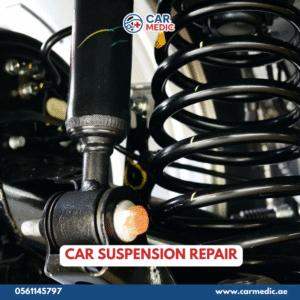
We are ready to restore your car’s handling and comfort, which maximizes its lifespan and enhances your safety. No more searching for “reliable car suspension repair near me”; just contact the professional team at Car Medic.
Call Car Medic today on 0561145797 to book in your service! We look forward to giving you the peace of mind that comes with expert car care.
FAQs Regarding Car Suspension Repair
1. How long do shocks and struts usually last before I need a suspension repair service?
Their lifespan, however, is greatly dependent on your driving environment and habits—mainly road quality. Generally, they are designed to last up to 50,000 to 100,000 kilometers (km), depending on the different manufacturers. However, if you do frequent driving on rough and unpaved roads, or with a lot of weight loaded into your car—like tools or constant passengers—you may have to deal with them wearing out faster than you’d like. We recommend having your shock absorbers and struts professionally inspected every 20,000 km and most definitely after the 50,000 km mark to catch early signs of fluid leaks or reduced damping force.
2. What if I don’t address my car’s need for suspension repair?
Ignoring suspension problems is very unsafe and very expensive over the long term. If your shocks or struts fail, then the tires of your vehicle lose consistent contact with the road. This causes hydroplaning in wet conditions, dramatically increases stopping distance—as long as 20% longer—and drastically reduces the ability to handle sudden turns (evasive maneuvers) due to excessive body roll. In addition, bad suspension accelerates wear on your tires (cupping), brakes, and related steering components such as control arms and ball joints, relating to more complex and more expensive repairs down the line.
3. Why is wheel alignment necessary after car suspension repair?
Every time we change key structural members of the steering and suspension system, be it struts, tie rod ends, or control arms, the precise geometric relationship between the wheel and car chassis is disrupted. A professional wheel alignment will ensure the three critical angles—camber, caster, and toe—are all readjusted. This critical procedure ensures the car drives straight, centers the steering wheel, eliminates pulling, and promotes even tire wear, greatly extending the life of your very expensive tires and restoring your vehicle’s original handling characteristics.
4. Can a coil spring be repaired, or does it need to be replaced completely?
Coil springs—or leaf springs in some trucks and SUVs—are structural items that support the weight of the entire vehicle at all times and are always under load. If a spring has broken, cracked, or sagged severely—which means it has lost its designed load-carrying height—it cannot be safely repaired. Welding or heat-treating a spring is extremely hazardous and compromises the strength of the spring. Thus, when any coil spring is damaged, it must be completely replaced. For safety and balanced performance, we also require springs to be replaced in matched pairs—both front or both rear—to maintain consistent ride height and handling stability across the axle.
5. How can I tell the difference between a suspension problem and a steering problem?
While they are related systems, symptoms serve as clues. A suspension problem often manifests as excessive bounce, poor ride comfort, noise over bumps (clunks/knocks), and excessive nose-diving under braking. A steering problem typically shows up as difficulty turning the wheel, excessive play (looseness or “slop”) in the steering wheel, a tight or binding feeling when turning, or a constant vibration that you feel mainly through the steering column. Both necessitate a complete inspection of the front end by an expert because a worn component such as a tie rod end is part of both the steering and suspension systems and can cause symptoms to overlap. Ball joints, for instance, are a major pivoting point for the suspension and a structural member of the steering knuckle.
6. What are suspension bushings, and why are they so important in car suspension repair?
Suspension bushings are small, dense rubber or polyurethane parts with donut or sleeve forms. They are fitted into the attachment points where two moving metal parts come in contact, such as control arm attachment points to the chassis or the attachment of stabilizer bar (sway bar) links. In principle, they act as flexible, insulating cushions taking in road vibration, regulating the motion of the metal components, and avoiding metal-on-metal contact. Bushings fail because they crack, compress, or dry rot, resulting in loud clunking or squeaking sounds, excessive movement (play) in the suspension components, and reduced steering precision. Replacing worn bushings is an inexpensive kind of car suspension repair that can dramatically quiet the ride and restore handling feel.